

Quick, what credit score do you need to buy a home? If a number pops into your head, there’s a pretty good chance it’s wrong. And the right answer is getting harder to pin down, because the way credit scores are determined and delivered is changing – for the better.
Here’s what you need to know in today’s changing credit climate.
#1 Most People Are Guessing
Fannie Mae has been tracking consumer perceptions about mortgage requirements since 2015 and found that consumers consistently overestimated the minimum credit score lenders required to qualify for a mortgage. As recently as 2023, the average guess was 652.
In reality, the long-standing benchmark for loans backed by Fannie Mae and Freddie Mac is lower, at 620, and today even that isn’t a hard rule for every mortgage they back.
Like the Fannie Mae research, a recent survey from Veterans United found consumers continue to overestimate what it takes to qualify for a home loan:

The takeaway? Guessing wrong can cost you.
A renter who assumes their score is too low and they can’t qualify for a mortgage may never take steps to find out for sure.
#2 Credit Rules Are Changing
For decades, the mortgage industry relied on one set of scores – Classic FICO. Thanks to a push to promote competition, make credit scoring more inclusive, and help more Americans become homeowners, the Federal Housing Finance Agency (FHFA) has approved the use of new credit score models such as FICO 10T and VantageScore 4.0.
A different model can mean a different number for the same person. VantageScore says its model can score about 33 million adults that the Classic FICO’s model can’t. So the score you saw on an app last month may not be the one your lender pulls.
Remember: the models may be new, but the basics haven’t changed.
#3 Do Your Part And Partner With A Pro
Your credit score is important – no matter how it’s measured. Following the same basic rules will benefit your profile in the old and new score models:
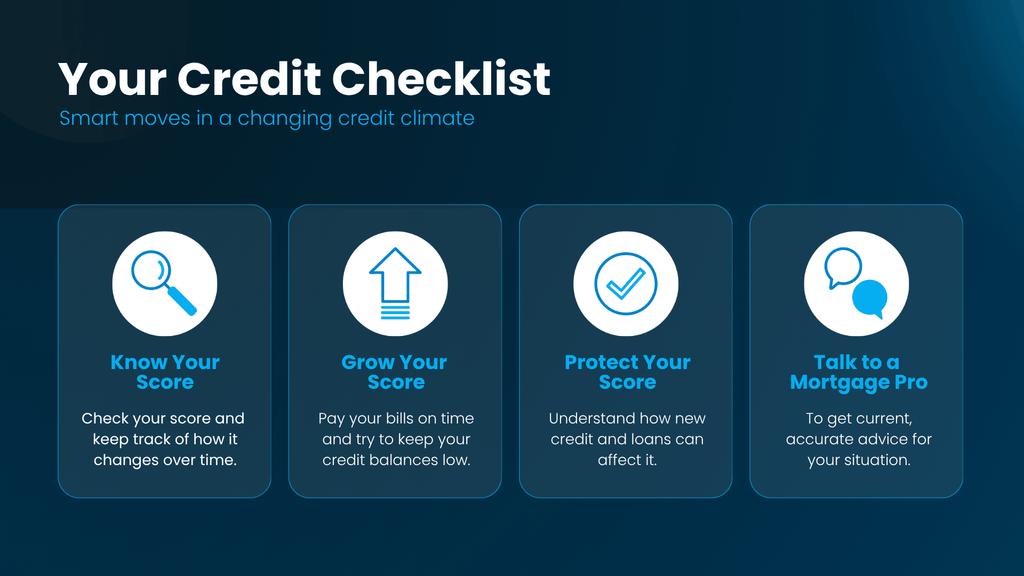
Because while credit models may change, the general advice for you to improve your score doesn’t. Financial awareness and consistency mixed with a little willpower can go a long way.
Bottom Line
Don’t make credit or homebuying decisions from a chart, an app, or a friend’s advice. With the rules shifting and so many misconceptions out there, it’s never too early to talk to a professional loan officer for advice on credit, budgeting, and what it would take to qualify for a mortgage.
You may be closer to owning a home than you think.



Join The Discussion