

When you’re planning a move, every monthly cost counts. That’s why it can be frustrating to see home insurance keep creeping up. According to Intercontinental Exchange, it now makes up 9.6% of the average monthly mortgage payment.
But the latest numbers show some progress on that front – as the increases start to slow down. Here’s what you need to know and what you can do about it.
Premiums Are Rising More Slowly Now
A look at the past two years shows how much things have cooled down. In mid-2024, home insurance premiums rose 4.3% in a single quarter. By the second quarter of this year, that was down to 1.8%. That’s the smallest quarterly growth in almost 3 years – and that’s a good thing (see graph below):
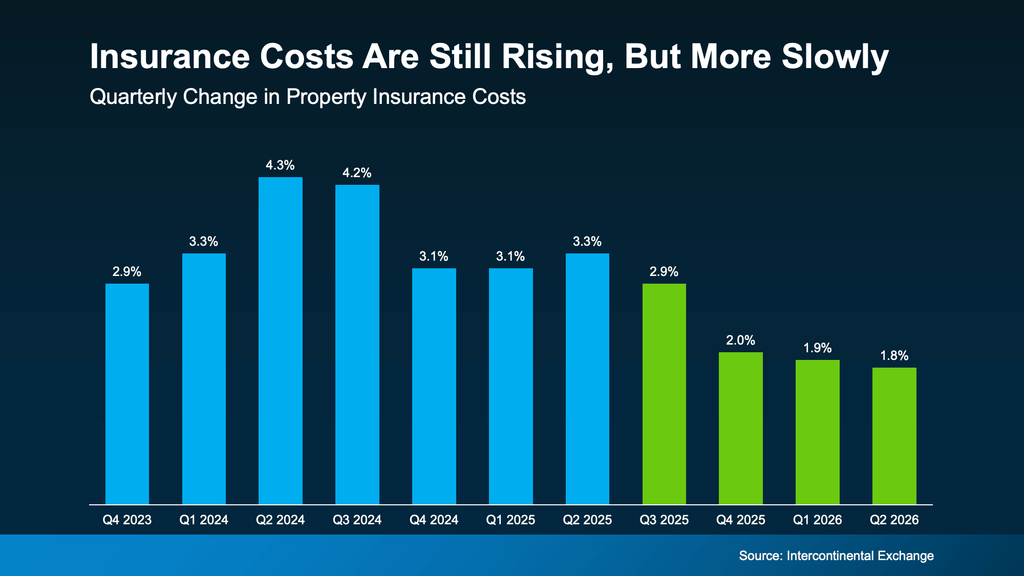
As Andy Walden, Head of Mortgage and Housing Market Research at Intercontinental Exchange, explains:
“Property insurance has been a fast-growing component of the monthly mortgage payment, but this quarter’s data shows the pace of increase is finally slowing.”
While your premium will likely still go up over time, it may not climb as quickly as it did a couple of years ago. And that’s, at the very least, a step in the right direction.
Shopping Around Can Pay Off
Here’s where you have some say in what you pay. Let’s take current homeowners as an example. Intercontinental Exchange found that when homeowners shopped around and switched insurance companies, their premiums went down 6.6% on average. Those who stayed with their current company saw an increase of 10.4% (see graph below):
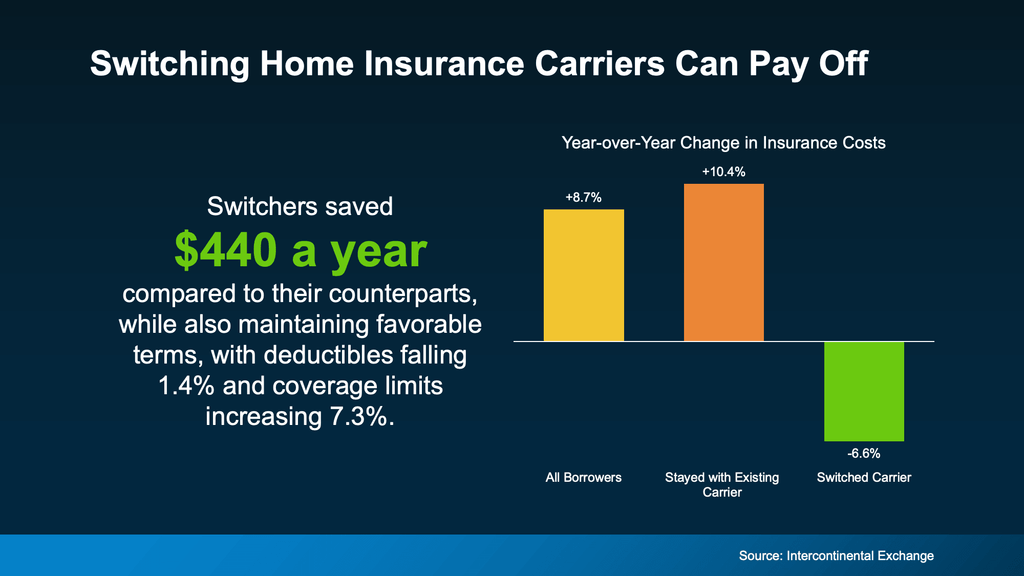
Think about that. That’s a big difference and it goes to show that looking for a new provider can literally pay off.
That works out to about $440 a year in savings for the people who switched. And they didn’t have to give up coverage to get it. Their deductibles dipped 1.4%, and their coverage limits actually rose 7.3%.
While this example is current homeowners, the same general idea applies for first-time buyers too. Shop around and get multiple quotes before you pick your insurance provider. Then, once you’re settled in, review your policy each year when it comes up for renewal. You’re not locked into the first price you get.
The Home You Choose Can Help, Too
The home itself plays a role as well. According to John Burns Research and Consulting (JBREC), newly built homes are 10% to 15% less expensive to insure than older ones nationally.
And while a brand-new home won’t necessarily be the right fit for every buyer, if you’re open to one, it could be one more way to keep your monthly insurance costs down.
Bottom Line
Home insurance is certainly a bigger part of the monthly costs than it used to be, and that can feel like just one more thing to juggle when you’re buying a home or moving. But knowing you have ways to keep it in check can take some of the pressure off.
Compare a few options before you buy, revisit your policy each year, and lean on trusted local professionals as you plan for your next move.



Join The Discussion